

Tire Pressure Frequently Asked Questions
Keeping your tires properly inflated is one of the easiest ways to extend tire life, improve gas mileage, and stay safe on the road. Below are answers to some of the most common questions drivers have about tire pressure.
What is the right tire pressure for my vehicle?
You can usually find the recommended tire pressure on a sticker inside the driver’s side door frame or in your owner’s manual. Most passenger vehicles recommend between 32 and 35 PSI (pounds per square inch), but it can vary by model and tire type.
How do I check tire pressure?
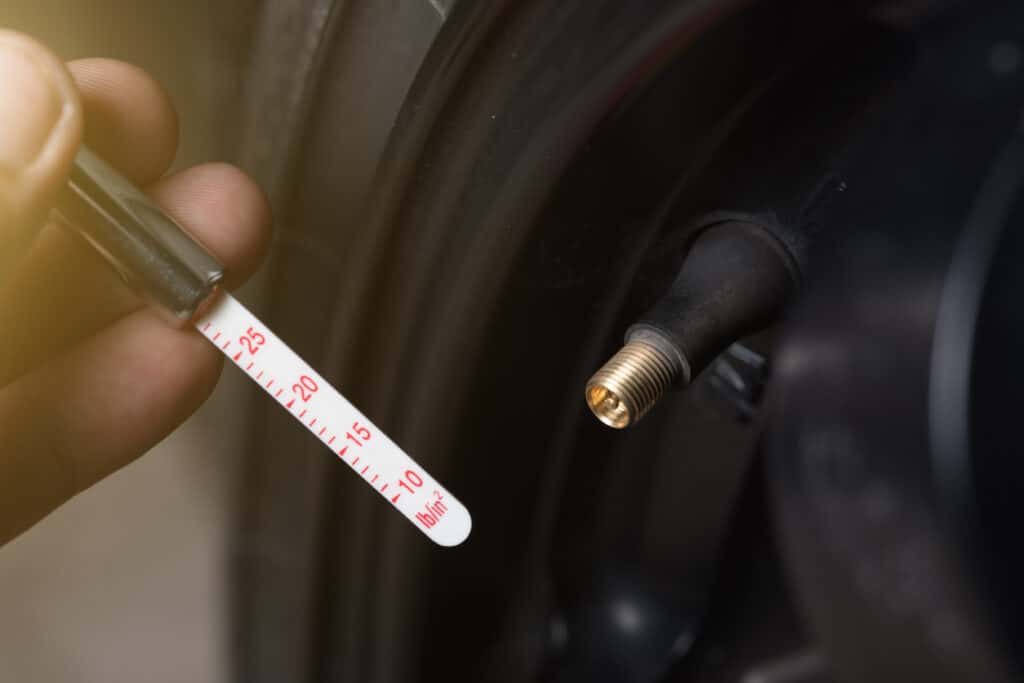
To check your tire pressure:
- Remove the valve cap from the tire.
- Press a tire pressure gauge firmly onto the valve stem.
- Read the PSI level on the gauge display.
- Compare it to your vehicle’s recommended PSI and adjust as needed.
You can use a digital or manual tire pressure gauge—both work well as long as they’re accurate.
What is a tire pressure monitoring system?
Most modern vehicles include a built-in tire pressure monitoring system (TPMS). It uses sensors to monitor your tire pressure in real-time. If the pressure drops too low or is uneven between tires, the system will trigger a warning light on your dashboard to alert you.
What does it mean if my tire pressure light is on?
If your tire pressure warning light comes on, one or more of your tires usually has low air pressure. Cold temperatures, minor leaks, or punctures can each contribute to this issue. Check your tire pressure manually using a gauge and inflate as needed. If the light stays on or keeps coming back, have your TPMS checked by a professional.
How often should I check my tire pressure?
It’s a good idea to check your tire pressure at least once a month and before any long road trips. Also, check it during major temperature changes, as cold air can lower tire pressure.
Can I rely only on my tire pressure monitoring system?
While your TPMS is a helpful tool, it’s still important to manually check your tire pressure with a tire pressure gauge. Some systems only alert you when the pressure is significantly low, so smaller issues may go unnoticed without a manual check.
What happens if I drive with low tire pressure?
Driving on underinflated tires can cause:
- Poor fuel efficiency
- Uneven tire wear
- Reduced handling and braking performance
- Higher risk of a blowout
Keeping your tires properly inflated helps keep you safe and extends the life of your tires.
Do I need to reset the tire pressure monitoring system?
Some vehicles require a manual TPMS reset after adjusting tire pressure or replacing tires. Check your vehicle’s manual for reset instructions or visit a service center if you’re unsure.
Can I fix low tire pressure myself?
Yes. Most gas stations have air pumps available, or you can use a portable air compressor at home. Use a tire pressure gauge to check PSI before and after inflating to ensure you’re at the right level.
Need Help with Tire Pressure?
If you’re unsure how to check tire pressure, need to inspect your tire pressure monitoring system, or want professional help, visit Hawk Ford of St. Charles. Our team can check your tires, adjust your pressure, and make sure your TPMS is working properly.
Still have questions? Contact our service department today or stop by for quick, expert tire care.
0 comment(s) so far on Tire Pressure Frequently Asked Questions